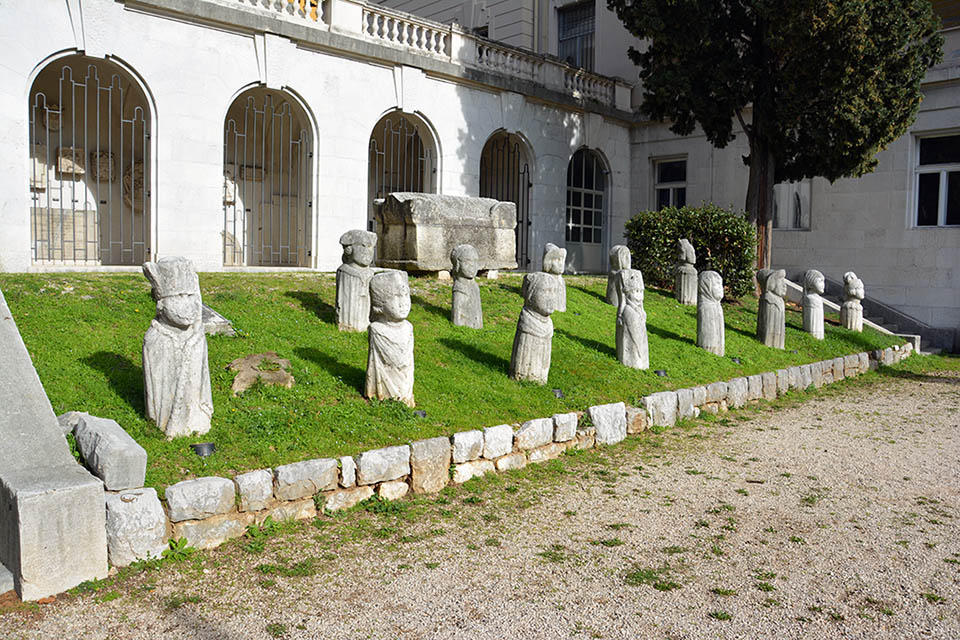
Adamic’s witnesses is a group name for stone portraits of Rijeka citizens that were made and erected in the late 18th century by Simon Adamic in front of his house on Fiumara. This gallery of Rijeka’s citizens from the end of the 18th century is today a valuable and interesting monument of the city’s cultural heritage, especially if one knows the story of their origin. Simon Adamic, a tobacco wholesaler and landlord in Rijeka, has enriched himself with skilful investments in the tobacco and tobacco industries. The stories that were circulating about him soon drew upon him mysteries, which found its stronghold in the envy of Rijeka’s citizens. Around 1785, a rumour emerged that Simon Adamic had hidden the discovery of a buried treasure in the church of Sv. Martin in Martinscica, where construction work took place at that time and which became the reason for his sudden enrichment. Simon Adamic is accused of failing to provide the state erar with a portion of the total value of the findings. The charge was backed by fourteen witnesses who accused him of treasure evasion. Based on their testimony, Simon Adamic was convicted and imprisoned in the Castle of the Crikvenica Chamber of Commerce. His 20-year-old son, Andrija Ljudevit, had already shown his enterprise spirit and had made a business trip and personally auditioned with the Habsburg Emperor. Afterwards, by order of Emperor Joseph II Simon Adamic was immediately released from prison with the recommendation that he should not be disturbed anymore. Immediately after leaving prison in 1787, Adamic began to build a family house on the busiest spot in the city, next to the Rječina river, and in front of it, along the sidewalk, erected fourteen columns with fourteen slanderers’ heads carved in order to public shame on Rijeka’s citizens and guests.